


Hair Transplant: Understanding Your Hair Restoration Options
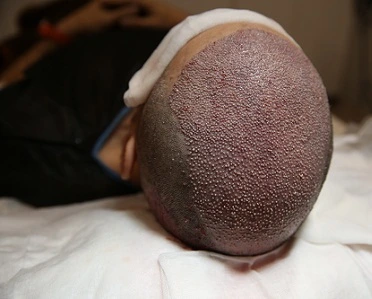



Understanding Hair Loss Treatment Options
Some people may benefit from non-surgical options designed to support the condition of the scalp and existing hair, while others may eventually consider surgical restoration.
Understanding the difference between these approaches is important before deciding what to do next.
A consultation can help establish the likely cause and pattern of hair loss, the condition of the scalp and whether a surgical or non-surgical approach may be appropriate.
Surgical Hair Restoration
A surgical procedure works by redistributing existing hair follicles from a suitable donor area to areas affected by hair loss.
FUE, or Follicular Unit Excision, is a commonly used surgical technique. Individual follicular units are removed from the donor area before being implanted into the recipient area.
DHI may be used as an implantation technique during FUE. It describes the method used to place the follicles rather than the extraction process.
The suitability of surgery depends on factors including donor hair availability, hair loss pattern, medical history and expectations.
More information about surgical treatment is available through our guide to the Hair Transplant Clinic Liverpool.
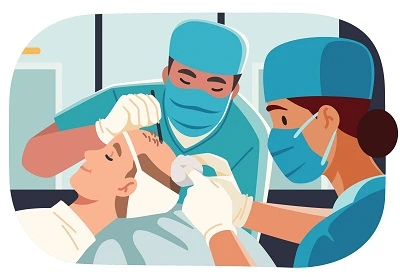
Non-Surgical Hair Loss Treatments
Not every patient looking for help with hair loss will require surgery.
Non-surgical treatments can be considered depending on the individual’s circumstances. These may focus on the scalp environment, existing hair or the appearance and density of thinning areas.
At Aesthetics of The Royal Liver Building, treatment options include PRP and exosome-based treatments, subject to consultation and suitability.
Our information on PRP Hair Liverpool explains more about platelet-rich plasma treatment and how it may be considered as part of a hair loss treatment plan.
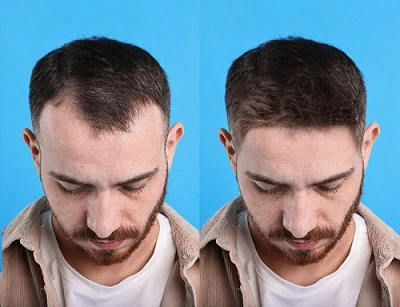
PRP for Hair Loss
A small blood sample is taken and processed before the platelet-rich component is prepared for treatment. The aim is to use the patient’s own biological material as part of a treatment approach for the scalp.
PRP is different from surgical transplantation because it does not involve removing and moving individual hair follicles.
Suitability depends on the individual’s circumstances and should be assessed during consultation.
Exosomes and Hair Loss
Exosome treatments are another area of interest for people looking at non-surgical approaches to hair loss.
Exosomes are small extracellular vesicles involved in cell-to-cell communication. Their use in aesthetic and regenerative treatments continues to develop, and patients should receive appropriate information about what the treatment involves before proceeding.
You can read more about Exosomes for Hair Loss and discuss suitability during consultation.
Choosing Between Surgical and Non-Surgical Treatment
The right approach depends on the extent and pattern of hair loss, the condition of existing hair, donor availability and what the patient wants to achieve.
Non-surgical treatments may be considered where maintaining or supporting existing hair is the priority. Surgery may be considered where a patient has suitable donor hair and wants to redistribute follicles to areas affected by loss.
What to Expect From a Surgical Procedure
The procedure is carried out under local anaesthetic. Treatment time depends on the number of follicles being transplanted and the size of the treatment area.
Smaller procedures may take around three to four hours, while more extensive procedures can take approximately six to seven hours.
The treatment plan should take into account the existing hairline, donor area and potential future progression of hair loss.
Recovery and Results
The head should be kept elevated during the initial period and patients should avoid unnecessary touching or rubbing. Hair should generally not be washed for the first 48 hours unless otherwise advised.
Strenuous exercise and heavy lifting should generally be avoided for approximately two weeks, while swimming, saunas and steam rooms should be avoided for around four weeks.
Temporary shock loss can occur following surgery. Visible improvement may begin from around six months, with final results potentially taking 12 to 18 months.
Why Patience Is Important
The transplanted follicles need time to settle and develop. The appearance of the recipient area can change significantly during the first several months.
Patients should therefore understand the expected timeline before deciding whether surgery is right for them.
Frequently Asked Questions
Book Your Private Consultation
If you are unsure which approach is right for your hair loss, a consultation can help you understand the available options.
Your current hair loss, existing hair, scalp, donor area and expectations can all be considered before treatment is recommended.
Aesthetics of The Royal Liver Building provides a range of non-surgical aesthetic treatments, while patients requiring surgical hair restoration can be assessed for treatment through the associated clinical pathway.
Book Your Private Consultation
Your current hair loss, existing hair, scalp, donor area and expectations can all be considered before treatment is recommended.
Aesthetics of The Royal Liver Building provides a range of non-surgical aesthetic treatments, while patients requiring surgical hair restoration can be assessed for treatment through the associated clinical pathway.
Further Reading
PRP Hair Liverpool
Hair Transplant Clinic Liverpool
FUE Hair Transplant Liverpool
FUE Hair Restoration Liverpool
Hair Transplant Treatment
Hair Transplant Questions
Hair Loss Clinic Results
Hair Transplant Results and Patient Satisfaction
Hair Transplant Surgery in Liverpool
DHI Hair Transplant
Male Hair Loss Treatment Liverpool
Hair Transplants Turkey
Beard Transplant Liverpool
Eyebrow Transplant Liverpool
FUE Hair Transplant Liverpool – Cosmetic Surgery
Hair Transplant in Liverpool – Cosmetic Surgery
Hair Transplants – Cosmetic Surgery
Beard Transplant Liverpool – Cosmetic Surgery